

A note on the rating scale:
Five Stars, No Further Questions - Loved the book enough that any minor flaw became irrelevant to the experience. It is a favourite, an enthusiastic recommendation, and probably something I will bring up without being asked.
Nearly Perfect - The book came very close to becoming a favourite, but one noticeable issue held it back. I still had an excellent time reading it. Please do not let the disproportionately long complaint in the review convince you otherwise.
Fine Is a Complete Sentence - The book had enough to keep me reading, though not enough to leave a lasting impression.
We Need to Talk - Somewhere inside this book was an idea I might have enjoyed. Unfortunately, I had to drag myself through everything surrounding it to find out.
All ratings reflect my own experience rather than a universal verdict on the book. I rarely rate books one star because I usually stop reading before things get that far.
Nearly Perfect
I Who Have Never Known Men by Jacqueline Harpman
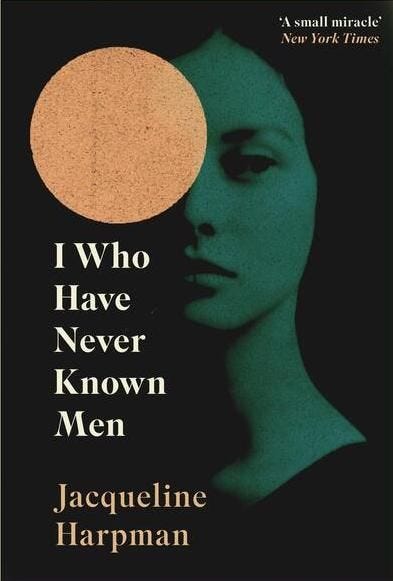
When I posted that I was reading this book, people responded with the kind of enthusiasm that immediately raises expectations. Great read. Favourite book. Loved it. All of that.
So it was no wonder I went in expecting something special. And for the most part, it was.
The story is about forty women imprisoned in an underground bunker, watched by male guards who never speak to them or explain anything. The narrator is the youngest, known as the child, and she has no memory of any life before captivity. When the guards suddenly leave, the women escape into a world that gives them no more answers than the bunker did.
The thing I loved the most was how completely Harpman places us inside the protagonist’s mind. We are curious when she is curious. We are confused when she is confused. We start asking the same questions she asks, and because she has no frame of reference, we lose ours too. Few books manage that level of closeness, where you feel like you are growing alongside the character instead of simply watching her grow.
My only issue was the lack of answers. We never find out how the women got into the bunker, who put them there, or what exactly happened to the world.
I understand why Harpman does that. The protagonist spends her entire life without answers, so it makes sense that we are not handed them either. I admire it as a choice and I even think it makes the book more powerful. But I am also the kind of reader who wants one solid piece of ground by the end (This is the same issue I had with The Hounding).
So yes, this was a great read and, yes, it gave me a lot to think about, but it also left me with way too many questions I just could not let go of
The Hounding by Xenobe Purvis
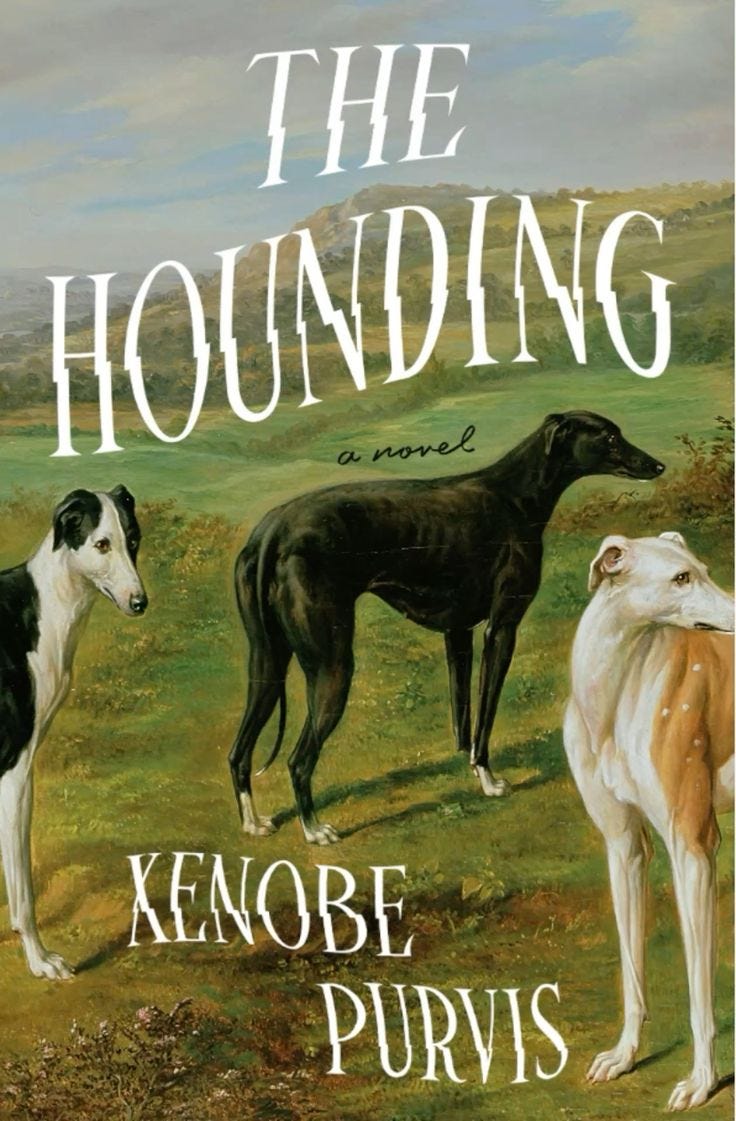
I picked this up because of a Goodreads challenge, but a novel about five orphaned sisters in an eighteenth-century village who may or may not be turning into dogs was never going to remain unread for long. The premise alone had me seated.
My favourite part of the book was Little Nettlebed itself. The village has an eerie cosiness that the novel sustains beautifully, even as increasingly strange things begin to intrude upon everyday life. Unfamiliar creatures wash up on the shore. Indistinct figures appear at the edges of people’s vision. Nothing feels entirely impossible there, yet nothing can be trusted either.
The Mansfield sisters sit at the centre of the story, but the book never allows us to get close enough to truly know them. Their story is pieced together through the villagers: what they claim to have witnessed, what they heard from someone else, and what they had already decided to believe. The sisters gradually become less like people and more like a story the village tells itself. And that choice makes the book far more unsettling than a straightforward transformation tale would have been because the horror lies not only in the possibility that the girls are changing, but also in how eagerly everyone around them begins constructing a version of events.
And once the village decides the sisters are unnatural, almost anything can be made to support that belief.
The only reason I’m deducting a star is the ending. I usually enjoy ambiguity. I like finishing a book with several possibilities still circling in my head, especially when I can sense that the author knows the answer even if they have chosen not to reveal it.
Here, however, the ending felt so open that I could not tell whether the book was leaning toward any explanation at all. And while I did not need everything to be neatly resolved, I did want to feel that some hidden truth existed beneath the uncertainty.
Instead, every interpretation seemed equally possible, and that left me less intrigued than irritated.
Still, I loved the experience of reading it. The atmosphere, the village, the sisters, the rumours, the horror, all of it worked for me. I can absolutely see myself bumping it up to five stars when I reread it.
Yesteryear by Caro Claire Burke
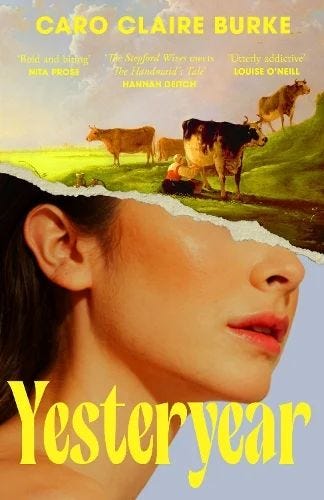
This book had been following me around the internet for months, usually described in the breathless language reserved for future classics. Then Anne Hathaway signed on to star in and produce the adaptation, so yes, I took the hint.
For a good portion of the book, I was convinced this would be a five-star read.
Natalie is a brilliant portrayal of the tradwife influencer as a fraud. Her entire public identity rests on faith, homemaking, marital obedience and the supposed fulfilment of serving her husband, yet very little about the life she actually leads feels sincere. She is fiercely ambitious and controlling. She condemns other women while exercising the very independence she insists women should surrender.
The explanation behind her “travelling back in time” to 1855 was where the book lost its star. I had been waiting for some strange, fantastical reveal that would make the whole thing snap into place. Instead, the explanation reduced too much of her behaviour to an individual psychological crisis.
And once Natalie began to seem like an unusual case rather than the logical product of the world she had chosen to promote, the critique became less powerful. Her beliefs could be dismissed as symptoms of her unravelling rather than examined as ideas that remain dangerous even when held by someone perfectly lucid.
I would not recommend this to everyone, but I had a good time reading it. I just wish the ending had trusted the critique the book had already spent so much time building.
Fine Is a Complete Sentence
The Caretaker by Marcus Kliewer
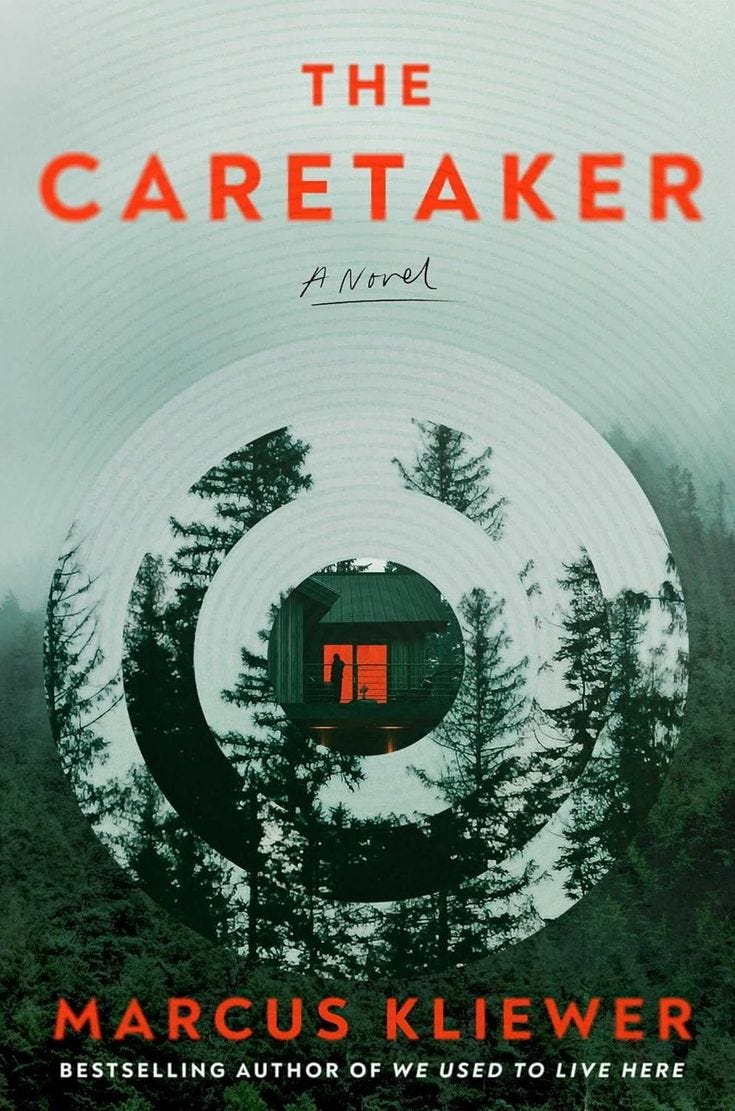
I went into this with dangerous levels of faith because Marcus Kliewer wrote We Used to Live Here, and I loved that book enough for it to make it to my top ten books of 2025 (Look at me setting myself up for disappointment).
The story follows Macy, who takes a house-sitting job in the middle of nowhere after her father’s death leaves her financially desperate and responsible for her younger sister, Jemma. She is given a set of rules, or rites, she has to follow for three days while she looks after the place. Simple enough.
Except Macy is terrible at this.
Now, I don’t mind characters making mistakes in horror. In fact, I want them to make mistakes because if they do not, the story ends before anything interesting can happen. But Macy’s choices gradually stopped resembling believable human error and began feeling like the plot repeatedly pushing her toward failure. And once it became obvious that she would mishandle nearly every instruction she received, I was no longer wondering whether something would go wrong. I was just waiting to see which extremely avoidable mistake she would make next.
The premise also reminded me immediately of a creepypasta I read on the Scary For Kids website when I was around eleven or twelve. Kliewer’s version obviously does more, with the rules being more elaborate and the consequences being more serious, but…it just wasn’t enough.
I probably could have overlooked that resemblance had I enjoyed spending time inside Macy’s head, but that wasn’t the case either.
I also didn’t buy her relationship with Jemma. I understood what the book wanted their dynamic to be, but it never felt real to me. The dialogue did not have the messy, lived-in quality of siblings who have grown up hurting and needing each other. It felt too exaggerated, almost like a sketch of a sister relationship rather than an actual one.
For most of the book, I was certain this would receive two stars, which is usually the lowest rating I give anything I manage to finish. Then the ending pulled off something interesting enough to make me reconsider. It did not redeem the entire book, but it gave the final stretch an energy and purpose that much of the earlier story had been missing.
Superbia by Colette Rhodes
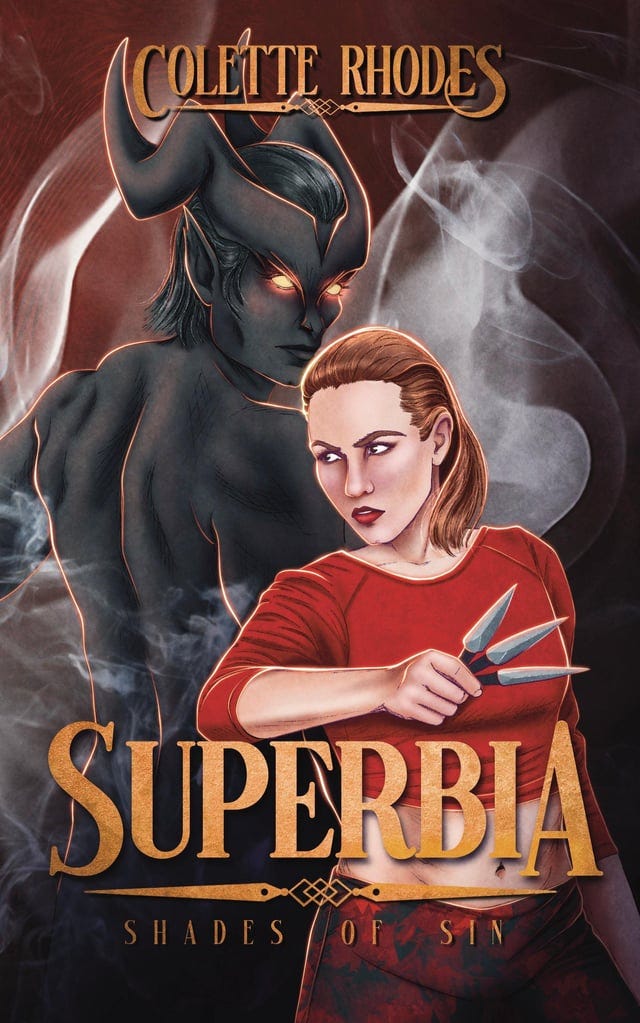
I had actually intended to read Superbia first, but once I realised it was the second book in the Shades of Sin series, I decided to do the responsible reader thing and picked up Luxuria instead (A mistake I’ll be talking about in the next section).
Superbia follows Astrid, my favourite character from Book 1, a Hunter raised to kill Shades, and Soren, a Shade who is very much the enemy she has been taught to hate. (This is very much enemies-to-lovers. More specifically, grumpy x more grumpy.)
I loved Astrid because she has that eldest daughter quality where you can practically hear her sighing before solving everyone else’s problems.
Soren, meanwhile, confirmed something I had already started suspecting after Luxuria: Rhodes likes writing heroes who are down bad. Even when they are pretending otherwise, they are usually attracted to the FMC very early on in the book. And I love that for myself. Give me a man falling first while the woman is still standing there with a knife and an attitude problem and watch me eat it up every single time. That right there is a system I support with my whole heart.
While I liked the banter between the two and enjoyed the way their relationship developed, none of it felt especially fresh. The plot follows the usual paranormal romance route: enemies, attraction, distrust, forced proximity, bigger conflict, feelings no one wants to admit, etc.
Then there is the Bride/Mate problem. The way Luxuria builds into Superbia felt very similar to the way Bride builds into Mate, and I couldn’t ignore it as much as I wanted to.
Still, the book gave me the beats I expected, and while those beats were enjoyable, they did not turn into anything more memorable for me.
Morning Glory Milking Farm by C.M. Nascosta
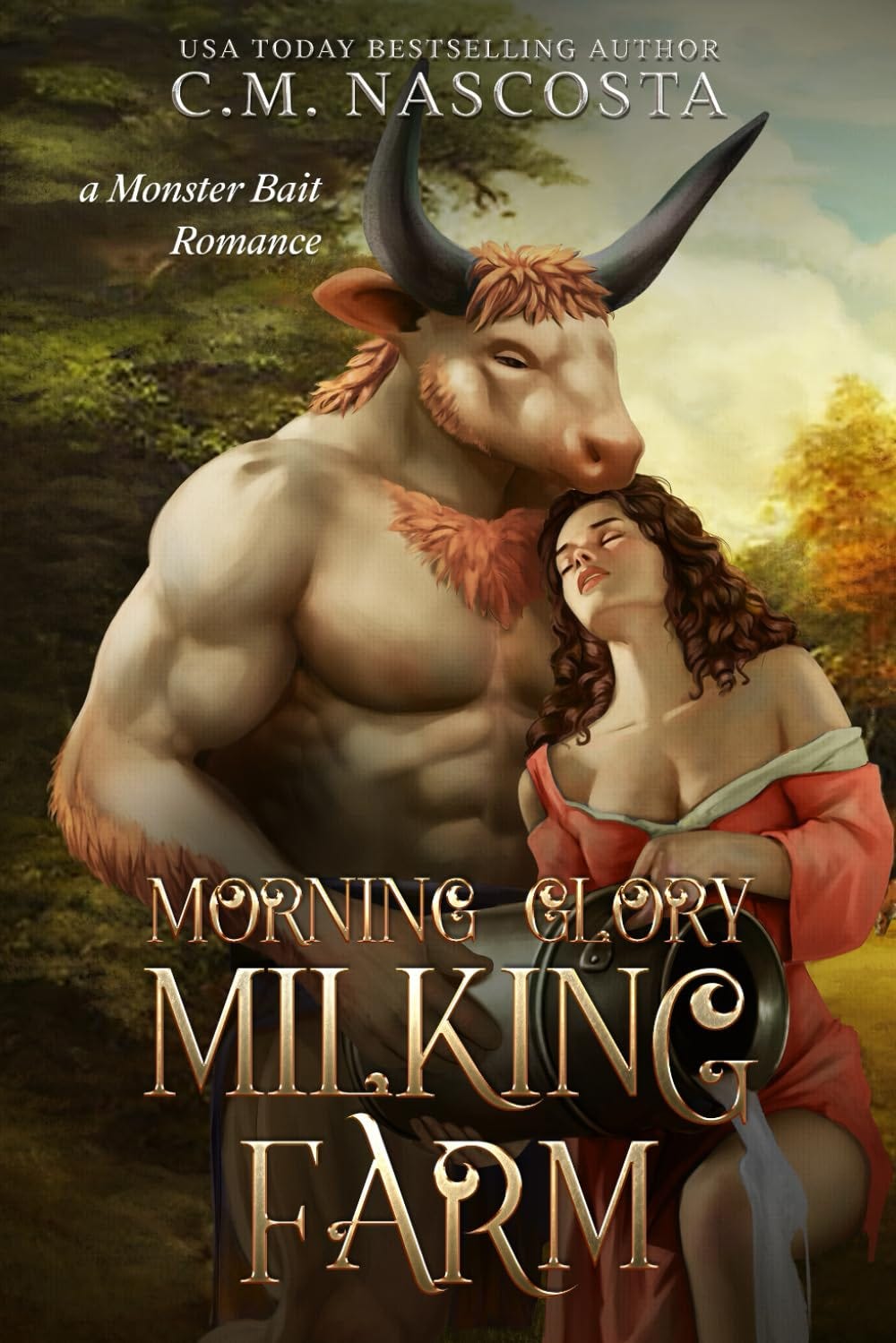
I wish I could say I picked this up for noble literary reasons, but I cannot lie in public like that. I had the judgment ready even before I starting reading and I was mentally prepared to come here and say, “Well, that was certainly a book.”
Then C.M. Nascosta had the audacity to know what she was doing.
The book is set in a world where humans and monsters coexist, and Violet takes a job as a “milking technician” at a pharmaceutical facility where minotaur semen is collected because it has value in producing erectile dysfunction or potency medication for human men. (Yes, the title is extremely literal.)
This could so easily have become one long joke. The title alone sounds like something you read on a dare. But Nascosta writes it with such sincerity that the absurdity starts becoming ordinary inside the world of the book.
Violet especially is what keeps the whole thing from tipping into parody. She reacts to her job with a mix of professionalism and private panic that feels much funnier than over-the-top disbelief would have been.
Rourke also had more to him than I expected. He could’ve easily been reduced to fantasy fodder but Nascosta actually gives him a personality (and thank god for that).
The spice was just right, too. Not too little nor so much that the characters disappeared underneath it
I don’t think I’ve read anything like this before, and I’m fairly certain I never will again (probably for the best). But as far as strange monster romance goes, this was handled with far more skill than I expected.
We Need to Talk
Luxuria by Colette Rhodes
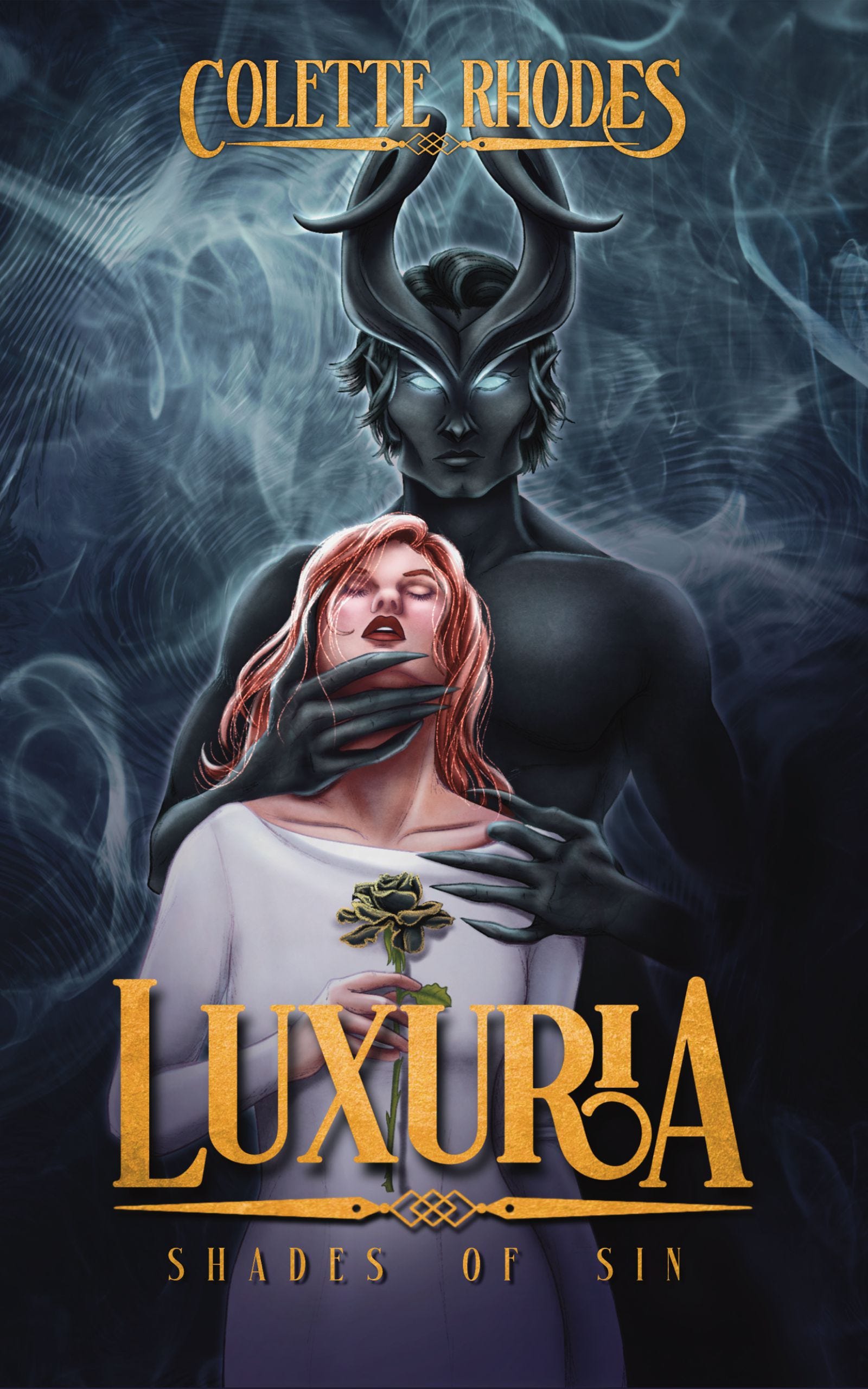
It had been a while since I read monster romance, and I was craving one badly enough to go through Reddit threads and have the next read picked for me.
Ophelia, a human, becomes the bride of Allerick, the king of the Shades, a monster species that feeds on fear. Of course, as this kind of story often goes, her reaction to him is very much not fear in the way he expects (This is an extremely smutty book, in case anyone briefly thought I had wandered into wholesome monster romance.)
The problem is that I had already read Bride by Ali Hazelwood, and once I noticed how similar the two stories were, I could not unnotice it (Luxuria came out before Bride btw). Maybe this is a common monster-romance storyline. Maybe “human woman gets traded into monster marriage for peace negotiations and then discovers biting is hot” is simply one of the foundational tropes of the genre. I don’t know. I haven’t read enough monster romance to make a statement. Either way, it affected the reading experience.
I couldn’t enjoy Luxuria fully because I kept thinking about Bride. And worse, reading Luxuria also made Bride lose a little of its charm for me.
The Seventh Veil of Salome by Silvia Moreno-Garcia
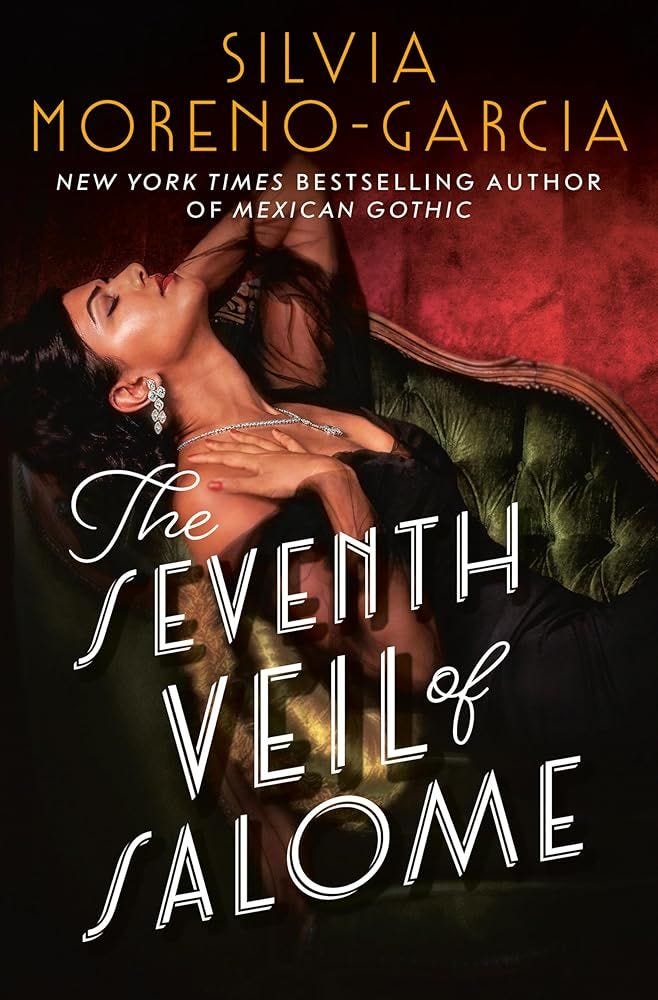
I wanted to like this so badly. I read Mexican Gothic by the author nearly four years ago, and it was easily one of the best horror novels I read that year. I’d bought the paperback of this almost a year ago in Chennai, so it had been sitting around long enough to make me feel like I should finally get to it.
And getting to it I did. Liking it, I did not.
I usually don’t gravitate towards novels set in Old Hollywood. The Seven Husbands of Evelyn Hugo remains the exception, and I think some part of me hoped this would offer a similar sense of behind-the-scenes glamour and emotional drama. (Spoiler alert: it did not.) The setting never really came alive enough for me to feel transported, and the sheer number of perspectives made the story feel scattered. Too much time was spent with characters I had no interest in following, so every shift in perspective pulled me further away from the parts that might have held my attention.
I also didn’t know much about Salome going in, and the book didn’t make her world easy to enter. I spent a surprising amount of time looking up the biblical story, the historical figures being referenced and the period surrounding the film production and, usually, that sort of research makes me more excited about a book. This time, though, it felt like I was doing homework to create an interest the novel had failed to generate on its own.
I reached the end mainly because the book had already been sitting unread for a year and I refused to let it defeat me twice. I doubt I will reach for another Silvia Moreno-Garcia book anytime soon.
Automatic Noodle by Annalee Newitz
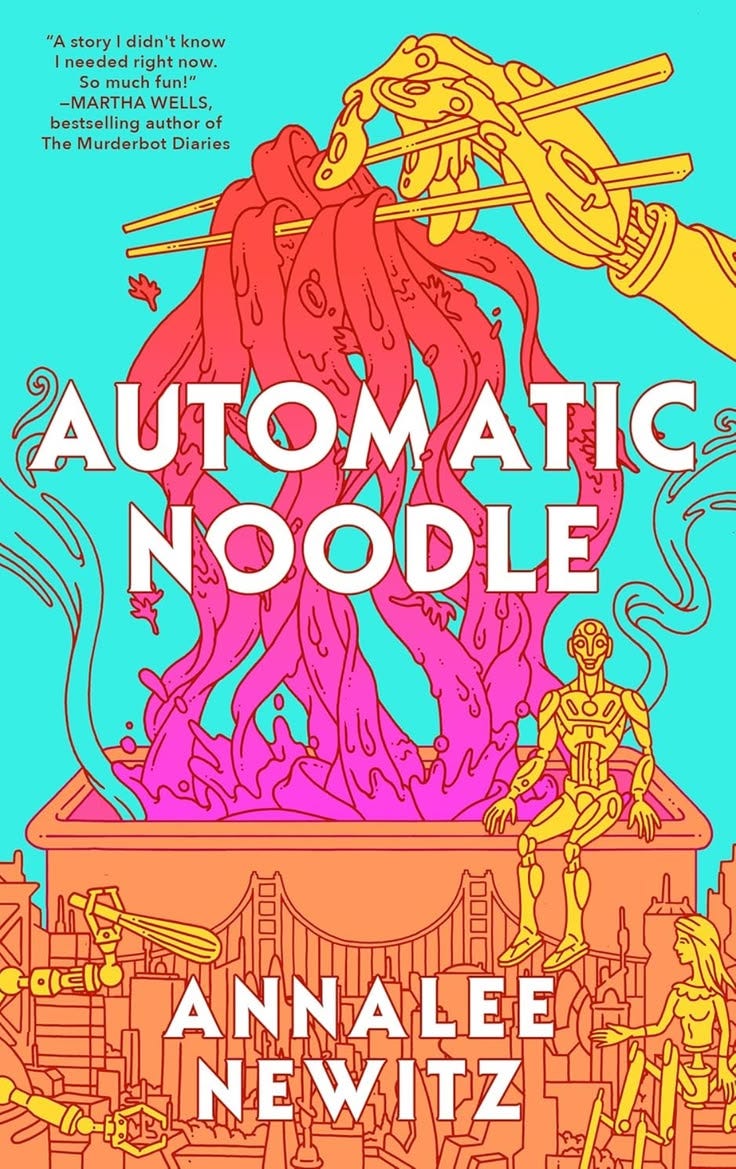
Every now and then, I ask my boyfriend to pick a book for me from my TBR. So far, he has picked five books and I have either ended up DNF’ing or hating them.
Today, I am pleased to announce that Automatic Noodle continues this tradition (Sorry, Mithran.)
I don’t read a lot of science fiction, and when I do, I’m very picky about it. This one got a chance because it was marketed as a cozy little story about community, identity, food, and survival. (Also, I am very easy to manipulate when noodles are involved.)
The book follows a group of abandoned robots who wake up in a ghost kitchen in postwar San Francisco and decide to make a life for themselves by opening a hand-pulled noodle shop.
I could see the vision. I really could.
That vision began glitching almost immediately.
Because what do you mean San Francisco is its own country now and is at war with the USA? What do you mean humans are living alongside robots who are recognised citizens with civil rights? WHAT DO YOU MEAN PEOPLE ARE BEING ROBOPHOBIC?
Listen, I usually enjoy bizarre settings, but the part about robots having civil rights made me short-circuit (see what I did there?). Maybe it is because of the direction the world is going in right now, but I could not even enjoy this as absurd speculation. I am only half joking when I say I can absolutely imagine people advocating for robot rights.
The biggest point of frustration, though, for me was that the book promised noodles and then kept giving me robot politics. I wanted food. I wanted the warmth of a kitchen, the labour of making noodles, the comfort of people gathering around a meal. Instead, so much of the novella was spent on the war, robot parts, robot functioning, robot rights, robot identity, and the logistics of being a robot in this version of California.
The book also tries to comment on several social issues through robots, and while I understood what it was doing, I just couldn’t take it seriously. Every time the book wanted me to feel something about robot identity, robot citizenship, or robot sexuality, I was sitting there like, what do you mean the robot is bisexual?
I think it could have been a fun read if it had leaned harder into the restaurant part and less into making the robots carry every possible allegory.
P.S. My search for a five-star read remains unsuccessful. I am now taking recommendations for next month and I promise to thank you if I love it and lovingly accuse you of wasting my time if I do not.
Note: My essays will always be free to read. If you’d like to support the time and care that go into writing them buy me a coffee ☕
I wish I were half as committed as you are to reading Dii. Also, I love how you intricately opened the literature without biasing it, yet gave opinions on the narration and background. I realized that a book that feels like an off-stage performance annoys you. I appreciate your damn patience for completing yesteryear and The Caretaker, and not dropping it midway-trust me, I would have. Also, loved your personal comment about robot politics, and your rant over noodles and questioning robot sexuality. I enjoyed your perspective and review. Thank you for convincing me to pick up Morning Glory Milking Farm. I am highly impressed by your review of this one.
Appreciation note: your account gives me such a Gilmore Girls vibe. I absolutely love it. Indeed, my favorite.
Try reading Half a Soul by Olivia Atwater. I'm not the biggest fan of Fantasy but a friend recommended it and I absolutely loved it.